Why Are Silk Orchids Perfect for Bathroom Decor?

Time:2026-11-12 Author:Ethan
0%

The question “Why are silk orchids perfect for bathroom decor” has a practical answer: they add color without needing sunlight or regular watering. A white orchid on a vanity can soften the look of tile, glass, and chrome. A small arrangement beside folded towels adds a calmer touch. No watering can required.

Bathrooms do present a few details worth considering. Steam, splashes, and dust can affect artificial flowers, and “silk” does not mean waterproof. Keep the arrangement away from direct shower spray and wipe its leaves gently with a soft cloth. If the room has little ventilation, check the display occasionally for dust or dampness around its container. Simple care helps it stay presentable.

Choose a realistic-looking orchid with natural variation in its petals and leaves. Very glossy fabric or stiff stems may look less convincing up close. Scale matters, too: a compact stem suits a narrow shelf, while a fuller arrangement needs a stable surface and enough clearance. Keep it away from the sink’s busiest area. Small changes help.

Silk orchids can be a useful choice for renters, busy households, or rooms where living plants struggle. They are not a perfect substitute for fresh flowers, and some designs look artificial in bright light. That is worth admitting. The best result comes from choosing a well-made piece, placing it thoughtfully, and treating it as decor—not as a plant that can thrive on neglect.
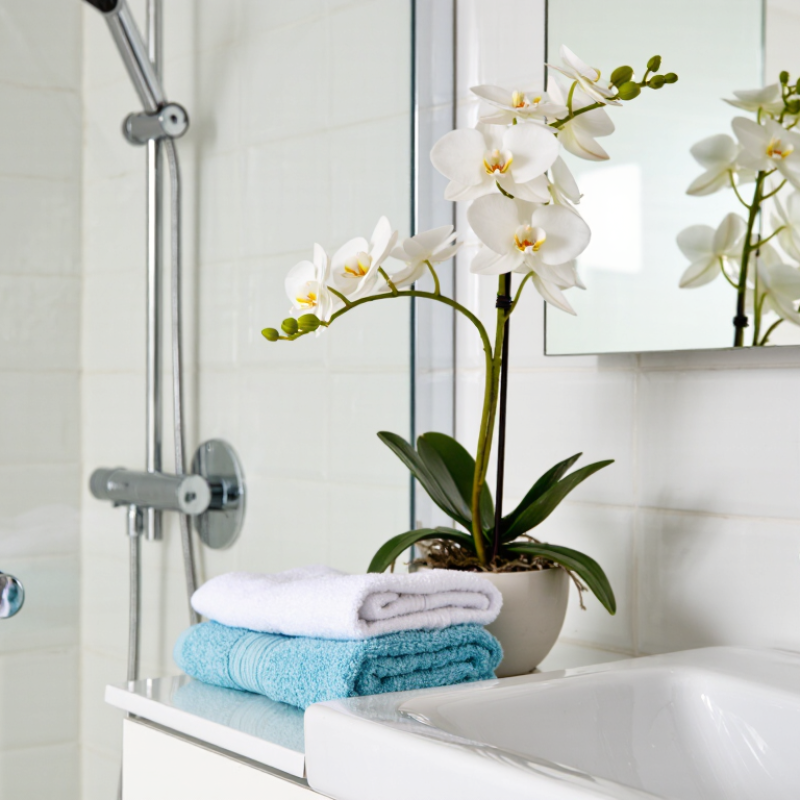
Why Are Silk Orchids Perfect for Bathroom Decor?

What “Silk Orchids” Are and How They Differ from Living Orchids

“Silk orchid” usually describes an artificial orchid made from fabric or other synthetic materials. The name does not guarantee that the petals contain real silk. Many designs use polyester, sometimes with molded plastic stems and leaves. Up close, a petal may feel smoother or stiffer than a living flower.

A living orchid has roots and responds to its surroundings. It needs suitable light, watering, and airflow, and may flower differently over time. A silk orchid does not grow, wilt, or need watering. It also has no natural fragrance. Its shape stays consistent, though dust can settle between the petals and colors may fade near a bright window. That trade-off is easy to overlook.

Tips: For a bathroom display, choose a stable pot and place the arrangement away from direct splashes. Wipe petals gently with a soft, dry cloth. Check the stems occasionally; a loose leaf can make even a polished arrangement look a little careless. In a small bathroom, one stem on a shelf may feel calmer than a crowded bouquet. Keep the room ventilated, since persistent dampness can affect some decorative materials and adhesives.

Bathroom Humidity and the EPA’s Ideal 30–50% Indoor RH Range

Bathroom humidity changes quickly. A hot shower clouds the mirror, dampens towels, and can leave moisture in corners. The U.S. Environmental Protection Agency’s A Brief Guide to Mold, Moisture and Your Home recommends keeping indoor relative humidity below 60%, ideally between 30% and 50%. The U.S. Department of Energy’s Energy Saver guidance also identifies 30%–50% as a useful home range. These figures are practical targets, not a promise that every bathroom will stay dry. A small hygrometer helps. Place it away from direct shower spray, then check readings at different times; one number can be misleading.

That range also explains why silk orchids can be a sensible bathroom accent. They bring color beside a sink or on a dry shelf without needing humid air to thrive. Still, “silk” does not mean waterproof. Mist, residue, and dust can collect on petals, so keep arrangements clear of splashing water and wipe them gently when needed. A working exhaust fan and an open door after bathing help remove moisture; decor cannot do that job. I would not assume a single high reading means a mold problem, either. Watch for persistent dampness, musty odors, or recurring condensation, and address the moisture source rather than relying on flowers to disguise it.

Bathroom Ventilation Benchmarks in the IRC: 50 CFM Intermittent, 20 Continuous

Silk orchids can bring color to a bathroom without needing sunlight or regular watering. A white bloom on a shelf can soften the look of tile and chrome. But decorative flowers do not manage moisture. A working exhaust fan matters more.

In homes following IRC-based requirements, bathroom exhaust is commonly rated for at least 50 CFM when used intermittently, or 20 CFM for continuous operation. CFM means cubic feet of air moved per minute. The fan should exhaust outdoors, not simply push damp air into an attic or another room. Check the code edition adopted locally, since requirements and permitted arrangements can vary. Rated airflow also depends on duct length, bends, and installation. Numbers on a fan label are not the whole story.

Use the fan during bathing and leave it running afterward, following its controls and instructions. A mirror that stays fogged for a long time may signal weak airflow, though it is not a precise test. I would check the grille and duct before blaming the room. Small details matter. Place silk orchids away from direct splashes, and dust their petals often; damp dust can cling to the fabric. They add a calm note, but they cannot replace ventilation.

Choosing Silk Orchid Materials, Finishes, and Arrangements for Damp Spaces

Why Are Silk Orchids Perfect for Bathroom Decor?

Choosing Silk Orchid Materials, Finishes, and Arrangements for Damp Spaces

In a bathroom, silk orchids offer lasting color without needing sunlight or regular watering. Look for tightly woven petals and leaves with clean edges. Polyester blends often hold their shape well, while fabric textures can look softer and more natural. Check the stems, too: flexible wire makes it easier to shape an arrangement without forcing the blooms.

Choose a matte or lightly textured finish. High shine can look conspicuous beside stone, tile, and glass. Damp air is usually manageable, but silk flowers are not waterproof. Keep them away from direct shower spray and spots where water collects. That matters. A quick dusting with a soft, dry cloth helps prevent residue from settling into the petals. Avoid soaking them unless the maker’s care instructions allow it.

For a small vanity, one or two stems in a weighted ceramic vase can feel calm, not crowded. On a shelf, a taller arrangement adds height, but leave space around it for airflow and easy cleaning. Keep the vase clear of sink splashes. One easy mistake: choosing blooms that look beautiful online but overwhelm a narrow counter. Measure the space first. And if the arrangement feels slightly imperfect, adjust the stems rather than forcing every flower into symmetry.

Why Are Silk Orchids Perfect for Bathroom Decor? Choosing Materials, Finishes, and Arrangements for Damp Spaces

Design factor Suitable option Bathroom benefit Care or placement guidance
Flower material Polyester fabric petals Lightweight petals hold their shape and do not need watering. Keep away from direct splashes; gently dust or wipe according to the maker’s care instructions.
Petal finish Matte or softly satin finish A restrained sheen looks natural under bathroom lighting and is less reflective than a glossy finish. Choose a finish that suits the room’s light; inspect delicate coatings before using any cleaning product.
Stem construction Flexible wire stem covered with plastic or fabric Stems can be shaped to fit a vase and adjusted without adding water. Keep cut or exposed wire ends covered and dry to reduce the chance of corrosion.
Leaf material Molded polyester or plastic leaves Leaves provide a consistent green accent without the care needs of live foliage. Remove dust regularly; avoid leaving leaves in contact with wet surfaces.
Vase and container Glazed ceramic, glass, or sealed resin These materials are easy to wipe clean and do not require a water-filled vase. Use a stable base and a dry interior; add clean decorative stones or floral foam to secure stems.
Arrangement size Compact arrangement with open spacing A smaller display fits countertops and shelves while allowing easier cleaning around it. Leave clearance from faucets, shower spray, heated appliances, and frequently touched surfaces.
Color palette White, blush, pale lavender, or soft yellow flowers with green leaves Light, muted colors pair well with common bathroom tile and neutral fixtures. Match the flowers to the room’s existing colors rather than relying on natural light, which may be limited.
Humidity exposure Occasional bathroom humidity with good ventilation Artificial flowers do not absorb water like fresh blooms, so they avoid wilting from missed watering. Silk-style flowers are not waterproof. Ventilate the room and move the arrangement if it becomes damp or develops residue.
Best placement Dry shelf, vanity corner, or toilet-tank ledge away from splashes Elevated placement keeps the display visible while reducing contact with standing water and cleaning products. Keep clear of shower enclosures, window condensation, and areas where towels or toiletries may knock the vase over.
Routine maintenance Regular dry dusting and occasional gentle surface cleaning Simple care helps preserve the flower’s appearance without watering or pruning. Test a damp cloth on an inconspicuous area first; allow the arrangement to dry fully before returning it to the bathroom.

Practical tip: Silk orchids can suit a bathroom when placed in a well-ventilated, splash-free spot. Persistent dampness, condensation, and direct water exposure can still affect fabric, coatings, and stem components.

Placement and Cleaning Practices for Long-Lasting Bathroom Displays

Silk orchids work well in bathrooms because they bring color without needing natural light or daily watering. Their placement still matters. Set an arrangement on a vanity corner, a dry shelf, or a toilet tank away from splashes. Keep it clear of the shower and bath, where repeated steam can soften adhesives, distort petals, or leave dust damp. A little distance helps. Choose a vase with a stable base, especially on narrow counters, and leave room to wipe around it. Avoid direct sunlight from a window; prolonged exposure may fade the petals.

Cleaning is simple, but gentle handling makes a difference. Dust the flowers weekly with a soft makeup brush or a clean microfiber cloth, working from the inner petals outward. For stubborn marks, check the care instructions and test a barely damp cloth on a hidden leaf first. Do not soak the arrangement or use household sprays; dyes and finishes can react unpredictably. Let any cleaned parts air-dry fully before returning the display to a humid spot.

Bathroom decor is not maintenance-free, even when the flowers are artificial. Check the stems and vase occasionally for dust buildup, loose petals, or trapped moisture. If the room stays steamy, move the arrangement farther from the shower or open a window after bathing. Not foolproof. A silk orchid can still look too artificial beside glossy tiles, so try a smaller stem or a less crowded vase before committing to a prominent spot.

FAQS

What does “silk orchid” mean?

It usually means an artificial orchid made from fabric or synthetic materials. The petals may be polyester, not real silk.

How is a silk orchid different from a living orchid?

It does not grow, wilt, or need watering. Its shape stays consistent, but it has no natural fragrance.

Can I display a silk orchid in a bathroom?

Yes. Choose a stable pot and keep it away from direct splashes. One stem on a shelf may suit a small room.

How should I clean artificial orchid petals?

Gently wipe them with a soft, dry cloth. Dust can settle between petals, and damp dust may cling to fabric.

Can silk orchids prevent bathroom moisture problems?

No. Decorative flowers do not remove moisture. A working exhaust fan matters more.

What bathroom fan airflow is commonly listed in IRC-based requirements?

Common benchmarks are 50 CFM for intermittent use or 20 CFM for continuous operation. Local code editions can vary.

Where should a bathroom exhaust fan send damp air?

It should exhaust outdoors, not into an attic or another room. Duct bends and length can affect airflow.

How can I tell whether bathroom ventilation may be weak?

A mirror that stays fogged for a long time may be a clue, but it is not a precise test. I might check the grille and duct first.

Conclusion

Why are silk orchids perfect for bathroom decor? Unlike living orchids, which need careful attention to light, watering, and growing conditions, silk orchids offer a lasting floral display without relying on the bathroom’s changing environment. They bring color and a natural-looking touch to the room while avoiding the need to manage a live plant in a space where humidity can fluctuate. The EPA’s recommended indoor relative humidity range is 30–50%, and good ventilation helps keep moisture under control. The IRC ventilation benchmarks cited for bathrooms are 50 CFM for intermittent exhaust or 20 CFM for continuous exhaust.

For longer-lasting displays, choose silk orchids with finishes and materials suited to damp spaces, and arrange them in a way that looks balanced without placing them where they will be regularly splashed. Keep arrangements away from direct water exposure, and dust them routinely with a soft cloth or brush. With sensible placement and simple cleaning, silk orchids can remain an attractive, low-maintenance accent in bathroom decor.

Ethan

Ethan

Ethan is a seasoned marketing professional with a deep expertise in our company's innovative product line. With a passion for sharing knowledge and insights, he takes the lead in regularly updating our corporate blog, where he explores industry trends, product features, and effective marketing......