How to Style Artificial Sunflowers for Farmhouse Decor?

Time:2026-11-26 Author:Ethan
0%

Farmhouse rooms often feel most convincing when their details look gathered, not staged. Artificial sunflowers can bring that warmth without requiring weekly water changes. But too many identical blooms can make a mantel feel like a shop display. And yes, faux can look too perfect.

The 2024 Houzz & Home Study reported that 54% of surveyed U.S. homeowners renovated in 2023. That figure does not measure floral decorating, but it shows how much attention people give their living spaces. A small, considered arrangement can help a room feel finished without a full makeover. This guide explores how to style artificial sunflowers for farmhouse decor, from choosing realistic stems to balancing color, texture, and scale. Think muted yellow petals in a worn ceramic pitcher, or a few stems beside linen napkins and a weathered wood frame. Simple details matter.

Practical choices matter, too. Check whether stems bend naturally, whether the leaves have varied tones, and whether the arrangement suits the light and scale of its spot. Dust can collect on faux petals; occasional gentle cleaning helps them stay inviting. A little restraint goes a long way. Still, there is no perfect formula. A wreath that looks charming on one old door may feel crowded on another. Use the ideas ahead as a starting point, then adjust until the display feels like it belongs in your home.
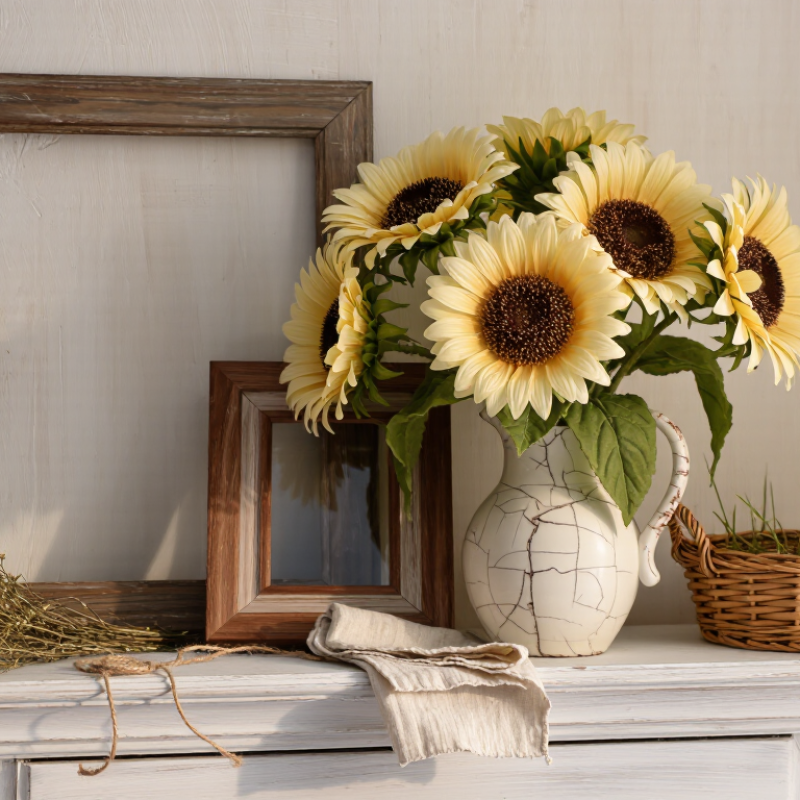
How to Style Artificial Sunflowers for Farmhouse Decor?

Choosing Artificial Sunflowers for a Farmhouse Look

For a farmhouse look, choose artificial sunflowers with soft golden petals, rather than a bright, uniform yellow. Look for brown or green-brown centers and slight differences in petal shape. These small variations keep a display from looking overly manufactured. Check the finish in natural light; shiny fabric can stand out beside weathered wood, linen, and matte ceramics. Small flaws help.

Consider bloom size and stem shape before buying. A few broad flower heads suit a crock or wide pitcher, while smaller blooms fit narrow bottles. Bendable stems make it easier to create a relaxed silhouette, but avoid stems that kink sharply or expose their wire. Leaves should have visible veins and a subdued green tone. If every flower looks identical, the arrangement may feel stiff. That can be useful for a neat display, but less convincing in a casual room.

Tips: Compare the flowers with your vase and nearby fabrics before arranging them. Trim or bend stems gradually, then vary the bloom heights. Leave a little open space between flowers; tightly packed heads can look crowded. Keep it simple. Dust petals gently with a soft cloth, and reassess the arrangement in daylight, where color and shine are easier to judge.

Choosing Artificial Sunflower Stem Lengths for a Farmhouse Look

Choose stem length to suit the display: shorter stems work well in small tabletop vases, while longer stems create a fuller look in floor vessels. These measurements are practical styling suggestions, not survey results.

Selecting Vases and Containers for Your Arrangement

For farmhouse-style artificial sunflowers, choose a container that feels sturdy and slightly imperfect. A weathered ceramic crock, clear glass jar, or small galvanized bucket can balance the flowers’ bold yellow petals. Match the container’s width to the stems: a narrow neck holds them upright, while a wide opening needs extra stems or a discreet bundle of floral foam. Leave some stem visible. It adds a relaxed, gathered-from-the-garden feel.

Scale matters. Grand View Research estimated the global artificial flowers market at about USD 1.5 billion in 2023, reflecting broad demand for decorative blooms. That figure does not dictate a style, but it suggests artificial arrangements remain a familiar home-decor choice. For a shelf, try a compact jar; for a dining table, use a low, stable vessel that keeps faces in view. I sometimes prefer a slightly mismatched container. Too much coordination can look staged.

Tips: Set the empty vase where it will sit, then check its height and stability. Test the fit. Add stems gradually, turning the arrangement as you go. If the bucket looks too shiny, soften it with a linen tie or place it beside worn wood. Don’t force symmetry; one stem leaning outward can make the display feel more natural.

Building a Natural-Looking Sunflower Display

A convincing sunflower display starts with varied shapes, not a crowded bunch. Choose stems with different heights, then bend a few gently so the blooms do not face the same direction. Place the tallest flowers near the back and let one or two shorter heads lean outward. Their golden petals look natural beside muted greenery, weathered wood, or a simple ceramic pitcher. Avoid arranging every stem at an identical angle; that neatness can make artificial flowers look stiff.

For a farmhouse table, use an aged crock or clear glass jar with visible stems. Add eucalyptus or fine grasses sparingly, leaving small gaps between blooms. If the flower heads seem too bright, soften the display with cream-colored linens or a worn wooden tray. I have found that a little asymmetry helps, though it can take a few adjustments to feel balanced. Step back and check the arrangement from the doorway, not only from above.

Tips: Fluff petals by hand and turn the stems toward available light. Trim or bend stems to suit the container. Keep it loose. If the display still looks artificial, remove one flower and try again.

Placing Sunflower Arrangements Around the Home

Artificial sunflowers work best where their golden color feels connected to the room. Set a low arrangement on a farmhouse dining table, leaving space for plates and conversation. A weathered pitcher or simple ceramic crock gives the stems a relaxed home. Keep the blooms just below eye level when seated. That small detail matters.

On a kitchen island, use a narrow vase with a few stems rather than a wide, crowded bunch. Place it away from the main food-preparation area, where it will not get in the way. A single stem can brighten an open shelf beside stacked bowls, while a fuller arrangement suits an entry table. Repeat one natural accent, such as linen or pale wood, nearby to make the flowers feel at home.

Artificial blooms are easy to move, so test a spot in morning and evening light before settling on it. Direct sunlight may fade some materials over time, and dust can collect around the petals. A soft brush helps keep them fresh-looking. Not everywhere. It is tempting to add sunflowers to every room, but too many can make the décor feel staged. I’d leave one surface bare and see whether the room feels calmer.

Maintaining and Refreshing Artificial Sunflower Decor

Artificial sunflowers can gather dust along their dark centers and textured petals. Lift each stem from the arrangement before cleaning. Use a soft makeup brush or a dry microfiber cloth, working from the flower center toward the petal tips. For stubborn marks, try a barely damp cloth on a hidden area first. Avoid soaking the flowers; moisture can loosen glued parts or leave marks on fabric petals.

Tips: Check the care label if available. Dust monthly, or more often near an open window. Keep arrangements out of strong, direct sunlight to help limit fading. Small care habits make a difference.

To refresh a farmhouse display, reshape bent stems gently by hand and turn the vase so the blooms face different directions. Replace dusty filler, wipe the vase, and trim nothing unless the stems are designed to be cut. A few uneven blooms can look more natural than a perfectly matched row. I sometimes leave one flower leaning slightly; it feels less staged, though it may not suit every room. Store seasonal arrangements in a dry box with tissue between the heads, away from heat and heavy items. Check them before displaying again.

FAQS

What sunflower colors suit a farmhouse room?

Choose soft golden petals instead of bright, uniform yellow. Brown or green-brown centers add a natural touch. Small flaws help.

How can I make an arrangement look less artificial?

Mix stem heights and turn blooms in different directions. Leave small gaps between flower heads. It may take a few tries.

Which vase works best for artificial sunflowers?

Broad blooms suit a crock or wide pitcher. Smaller flowers fit narrow bottles, where visible stems add detail.

How should I arrange flowers on a farmhouse table?

Place taller stems near the back and let one or two shorter blooms lean outward. Add greenery sparingly. Keep it loose.

What materials pair well with sunflower decor?

Weathered wood, linen, matte ceramics, and cream-colored fabrics soften golden petals. Check the colors in daylight.

How do I remove dust from artificial petals?

Lift each stem and brush from the dark center toward the petal tips. Use a soft brush or dry microfiber cloth. Avoid soaking them.

Can I use a damp cloth on stained petals?

Test a barely damp cloth on a hidden area first. Moisture may loosen glued parts or leave marks on fabric petals.

How should I store artificial sunflowers between seasons?

Place them in a dry box with tissue between the flower heads. Keep the box away from heat and heavy items. Check the blooms before displaying them again.

Conclusion

How to style artificial sunflowers for farmhouse decor begins with choosing blooms that feel warm and natural, with varied petal shapes, realistic colors, and a mix of heights. Pair them with simple containers such as weathered pitchers, glass jars, woven baskets, or ceramic vases to complement the relaxed farmhouse style. When arranging the flowers, vary the stem lengths and angles, add a little greenery, and leave enough space for the display to feel airy rather than overly perfect.

Place sunflower arrangements where they can bring a cheerful accent, such as an entryway table, kitchen counter, dining area, or shelf. Consider the scale and colors of each room so the flowers fit naturally with the surrounding decor. To keep the display looking fresh, dust the petals and leaves regularly, reshape stems as needed, and rotate or rearrange the flowers from time to time. Small seasonal changes to the container or accompanying greenery can refresh the arrangement while preserving its cozy, welcoming character.

Ethan

Ethan

Ethan is a seasoned marketing professional with a deep expertise in our company's innovative product line. With a passion for sharing knowledge and insights, he takes the lead in regularly updating our corporate blog, where he explores industry trends, product features, and effective marketing......