How to Steam Silk Lilies to Remove Shipping Creases?

Time:2026-10-01 Author:Sienna
0%

Silk lilies often arrive with flattened petals, bent stems, and narrow shipping creases. These marks can make an otherwise realistic arrangement look tired. Learning How to steam silk lilies to remove shipping creases requires gentle heat, patience, and careful observation. Artificial flowers may tolerate warmth, but their fabrics, dyes, and plastic components are not identical.

This guide introduces a controlled steaming method for restoring silk lilies without soaking them. It explains how to prepare a handheld steamer, test an unseen area, and keep the nozzle several inches away. Small movements matter. Steam should soften the fabric gradually, not wet the petals or loosen their adhesive details. A clean towel, low heat setting, and stable workspace can also reduce accidental damage.

Work slowly. Results vary.

The guidance is based on practical handling habits used when refreshing artificial floral displays, including checking petal edges and reshaping them while warm. I have found that rushing often creates new wrinkles or leaves shiny patches on delicate fabric. However, steaming is not suitable for every silk lily. Some flowers contain heat-sensitive foam, painted surfaces, or thin plastic leaves. When the construction is uncertain, a cool-air method may be safer.

The sections ahead will cover preparation, steaming distance, petal shaping, drying, and final inspection. They will also explain common mistakes, such as pressing the nozzle too close or pulling petals while they are damp. A careful approach cannot guarantee perfect results, but it can improve the flower’s appearance while protecting its texture and structure.
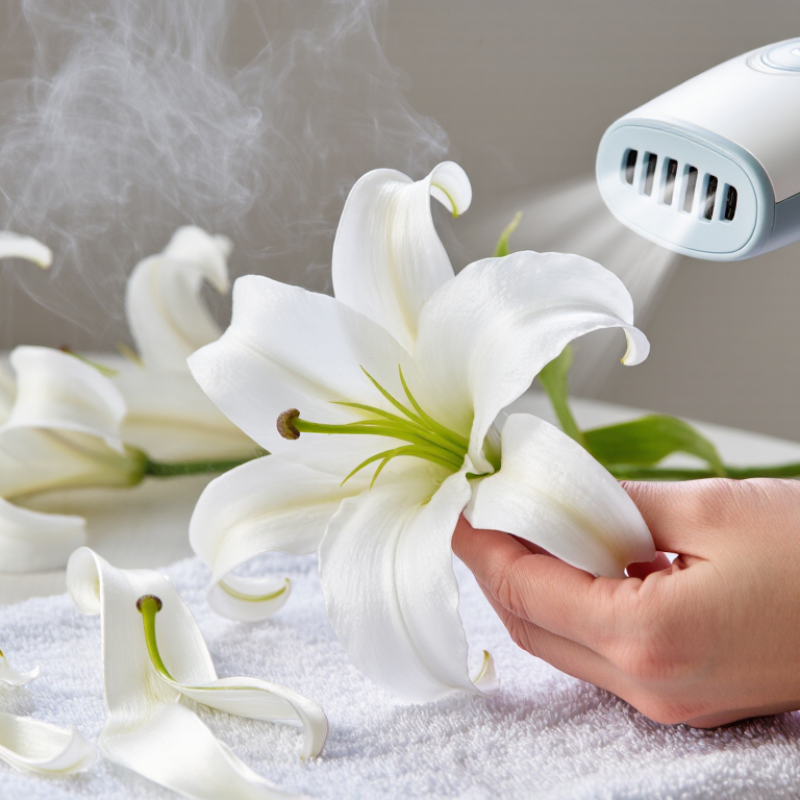
How to Steam Silk Lilies to Remove Shipping Creases?

Identify the Materials Needed for Steaming Silk Lilies

Before steaming silk lilies, identify the fabric and prepare a controlled workspace. Textile Exchange’s 2024 Materials Market Report reports that polyester made up 57% of global fiber production in 2023. Therefore, many “silk” lilies are synthetic rather than natural silk. Check the care label, product notes, or a hidden petal before applying heat. Never assume the name confirms the fiber.

Gather a handheld garment steamer, distilled water, heat-resistant gloves, a clean white towel, and a small spray bottle. Keep a wire cutter and floral tape nearby if stems need reshaping. A digital thermometer can help monitor the steam area, although it is not essential. Use a sturdy hook or vase to hold each flower upright. A lint-free cloth protects petals from dust and water marks.

Set the steamer to its lowest effective setting. Use distilled water to reduce mineral spotting. Hold the nozzle 10 to 15 centimeters from the petals, then move it continuously. Do not press the nozzle against the fabric. Work from the stem upward, separating crushed petals gently with gloved fingers. I once skipped the hidden-petal test, and one edge softened unevenly. That shortcut was careless. Steam one small section first, then wait for it to cool. If the material looks shiny, stiff, or discolored, stop immediately and reconsider the temperature. Ultrasonic cleaners, irons, and direct boiling water are poor substitutes for controlled steam.

Prepare the Lilies and Steamer for Safe Wrinkle Removal

Shipping creases often sit between the lily’s folded petals. Prepare the flower before switching on the steamer. Inspect each bloom under bright light and check its care label. The 2024 Textile Exchange Materials Market Report estimates global fiber production reached 124 million tonnes in 2023. Polyester represented about 57 percent, so “silk” may describe a synthetic textile. That distinction matters. Natural silk and synthetic petals respond differently to heat. Remove dust gently, then separate the petals and support the stem.

Fill the steamer with clean water and let it heat fully. Keep the nozzle 20 to 30 centimeters away. Test one hidden petal for five seconds. Watch for dye transfer, shine, curling, or softened adhesive. Stop immediately if any change appears. Hold the lily upside down only when the stem feels firm. Otherwise, place it upright in a stable vase. Move steam in brief passes from the base toward the petal edge. Never press the nozzle against fabric. Avoid soaked petals. Most creases relax within several short passes, not continuous heating.

After steaming, reshape each petal with clean fingers while warm. Use a towel beneath the flower to catch condensation. Let it cool completely before packing or displaying. Inspect the glue points and plastic center again. One crease may remain. That is not failure; repeated heat can cause greater damage. A cooler, slower pass is safer than chasing perfect symmetry. For valuable or unknown flowers, consult a textile conservator before steaming.

How to Steam Silk Lilies to Remove Shipping Creases

Prepare the lilies and steamer carefully: inspect the care label, hang the flowers upright, keep the nozzle away from the fabric, and let the petals cool before handling.

Suggested time budget for one silk lily: inspect for 30 seconds, position for 60 seconds, steam each affected area briefly for 20 seconds, and allow 120 seconds to cool. Use short passes, avoid soaking the petals, and test an inconspicuous area first.

Steam Each Flower Gently to Release Shipping Creases

How to Steam Silk Lilies to Remove Shipping Creases?

Steam each flower gently to release shipping creases. Do not rush this step.

Unpack the silk lilies and separate each stem before steaming. Check the petals for loose threads, glued details, or delicate edges. If the care label gives different instructions, follow it. Synthetic silk can soften or melt under excessive heat.

Fill a handheld steamer with clean water, then use its lowest heat setting. Hold the steamer about 15 to 20 centimeters from one flower. Move the steam slowly around the petals, rather than pointing at one spot. Work from the base toward the outer edges. This helps the fabric relax without becoming soaked. A few short bursts usually work better than continuous steam.

Shape each petal with clean fingers while it remains warm. Curve the edges naturally, and lift the center slightly for a fuller appearance. Keep steam away from glued centers, painted details, and plastic stamens. I once held the nozzle too close to a petal, and its surface became slightly wavy. That mistake taught me to test one hidden area first.

Allow each flower to cool completely before arranging it. Some creases may remain after one pass. Gentle repetition is safer than stronger heat. If water droplets collect, blot them carefully with a dry, soft cloth and let the flower air-dry upright.

Reshape the Petals and Leaves While They Are Warm

Shipping can flatten silk lilies, leaving sharp folds across the petals and leaves. Gentle steam helps relax the fabric without soaking it. I have restored many artificial flowers this way, but every material reacts differently.

Fill a handheld steamer with clean water and let it heat fully. Hold the nozzle about 15 to 20 centimeters from the flower. Move the steam around each petal instead of concentrating on one spot. The fabric should become warm and flexible, not wet. Never press the nozzle against the surface.

Work from the stem outward. Warm one petal for a few seconds, then shape its edge with clean fingers. Create a natural curve rather than forcing a perfect fold. Support the petal underneath while lifting its center slightly. Repeat this process with the leaves, bending them gently along their original veins. Keep each section in position until it cools.

The shape sets while warm.

I once steamed a lily too quickly and softened the outer coating. The petal became slightly shiny, so I now test an hidden area first. That small mistake changed my method. Some creases may remain, especially after long storage. A second light pass often works better than intense heat. Avoid steam near glued joints, painted details, or thin decorative layers. After reshaping, place the lily upright in a dry room and let it cool completely before arranging it.

Allow the Silk Lilies to Dry and Set Their Natural Form

Shipping creases can make silk lilies look compressed and uneven. Gentle steam helps relax those folds without soaking the fabric. Hold a handheld steamer 20 to 30 centimeters away. Keep it moving around the petals and leaves. Never press the nozzle against the flower.

Support each lily with one hand while steaming the underside of its petals. Shape the edges with clean fingers, using light pressure. Avoid pulling sharply, because heated fabric can stretch or lose its finish. Check a hidden petal first. Some synthetic materials react poorly to heat, even when labeled as silk.

Let the lilies dry and set their natural form before arranging them. Place each stem upright in a clean vase or narrow container. Separate crowded blooms so air can reach every petal. This stage matters. Steam softens the creases, but drying preserves the shape you create.

Allow several hours for the flowers to cool completely. A full night is safer for thick petals or tightly folded blooms. Keep them away from direct sunlight, radiators, and strong fans. Excessive heat may warp the stems or fade pale colors. I once arranged a flower too quickly, and its petals slowly returned to their folded position. Patience would have prevented that mistake. If a crease remains, repeat a short steaming session rather than increasing the heat. Recheck the shape after drying. Perfect results may require two gentle attempts.

FAQS

How should I prepare a lily before steaming?

Inspect every bloom under bright light. Remove dust gently. Separate folded petals and support the stem. Check the care label first.

What steamer setting is safest for artificial lilies?

Use clean water and the lowest heat setting. Let the steamer heat fully. Lower heat is usually safer.

How far should the steamer nozzle stay from the flower?

Keep it about 15 to 30 centimeters away. The exact distance depends on the material. Never touch the fabric with the nozzle.

Should I test the flower before treating every petal?

Yes. Test one hidden petal for about five seconds. Watch for dye transfer, shine, curling, or softened glue. Stop if anything changes.

How should I move steam across the petals?

Use short passes from the stem toward the outer edge. Move around the petal instead of focusing on one spot. Keep the fabric warm, not wet.

Can I reshape petals and leaves while they are warm?

Yes. Support each petal underneath with clean fingers. Lift the center slightly and curve the edge naturally. Shape leaves along their original veins.

What parts should avoid direct steam?

Keep steam away from glued centers, painted details, plastic stamens, and thin decorative layers. These areas may soften or warp.

What should I do if water droplets collect?

Blot them with a dry, soft cloth. Place the flower upright in a dry room. Let it cool and air-dry completely.

What if one crease remains after steaming?

Do not chase perfect symmetry. One crease may remain. A second light pass is safer than stronger heat. I once held the nozzle too close, and the petal became slightly wavy.

Conclusion

How to steam silk lilies to remove shipping creases begins with gathering a handheld steamer or steam source, clean water, a heat-resistant surface, and soft gloves or a clean cloth. Prepare the lilies by gently separating the stems, petals, and leaves, while keeping the steamer at a safe distance to avoid water spots, scorching, or damage to the fabric. Test the steam on a less visible area before treating the entire arrangement.

Steam each flower lightly and evenly, moving around the petals rather than concentrating heat in one place. As the material becomes warm and flexible, carefully reshape the petals and leaves with your fingers, restoring their natural curves and spacing. Avoid pulling or pressing too firmly, especially around delicate edges. Once the creases are released, place the lilies in a well-ventilated area and allow them to cool and dry completely. Leaving them undisturbed helps the silk flowers retain their refreshed, natural form.

Sienna

Sienna

Sienna is a skilled marketing professional with a deep expertise in our company’s core products and services. With a passion for innovation and detail, she plays a pivotal role in crafting insightful blog posts that not only highlight the unique features of our offerings but also provide valuable......