Silk flowers can look effortless in a finished arrangement, but loose stems often tilt, sink, or shift when the display is moved. How to secure silk flowers in floral foam depends on the foam’s density, each stem’s weight, and the shape of the arrangement. A light daisy stem needs less support than a large rose with a heavy head. Small choices matter.
This guide explains how to prepare the foam, position stems, and create a stable base without crowding the design. You’ll learn when to use stem wire, floral picks, or a small amount of compatible adhesive, and how to test each placement before adding more flowers. Press stems in gently; forcing them can widen a hole and weaken the hold. If a stem feels loose, pause and reassess. Sometimes the foam is too soft, or the stem is simply too short. That can be frustrating.
The goal is a secure arrangement that still looks natural from different angles. Keep the flower heads balanced, conceal visible foam with greenery or filler, and avoid relying on glue alone for heavy blooms. These practical checks help reduce wobbling and make the display easier to handle. Even experienced arrangers may need to adjust a stem twice. That’s part of the process.
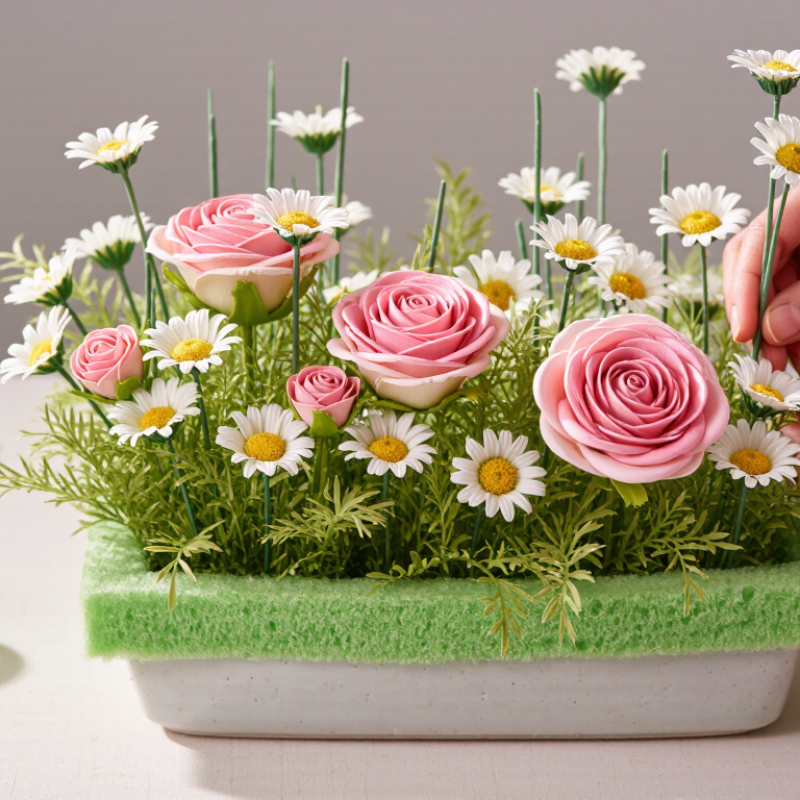
Choose the Right Floral Foam and Silk Flowers
Choose floral foam with a firm, even texture and enough depth to hold stems securely. Dry, non-absorbent foam is usually suited to silk arrangements; wet floral foam is designed for fresh stems and can crumble or retain moisture unnecessarily. Check the foam’s density by pressing its surface gently. It should resist dents without feeling brittle. Match the block to the container, leaving room for stems without forcing them against the sides. Choose silk flowers with stems that can be trimmed or shaped, and compare stem thickness with the foam’s firmness. A heavy bloom needs a sturdier anchor than a small daisy. The Grand View Research Artificial Flowers Market report estimated the global market at USD 1.6 billion in 2023, with projected growth through 2030. That scale makes material choice more than a finishing detail.
Tips: Test one stem first. Insert it straight, then angle it slightly; if the foam splits or the stem wobbles, use denser foam or a thicker stem. Trim stems gradually, since a cut that is too short is hard to correct. For a top-heavy flower, place it close to the foam’s center. I may still misjudge the balance when blooms are unusually large, so a quick test arrangement can reveal problems before the final placement.
How to Secure Silk Flowers in Floral Foam
Choose dry floral foam for silk flowers. Wet floral foam is made to hold water for fresh arrangements, while dry foam is suited to artificial stems.
Suitability ratings are practical guidance on a 1–5 scale, not laboratory measurements. Insert stems firmly into dry foam; use a hole made with an awl first if a stem is thick or delicate.
Prepare the Foam and Plan the Arrangement
Choose dry floral foam made for artificial stems; wet foam is softer and may crumble under repeated pressure. Measure the container’s opening, then trim the foam so it fits snugly without bowing the sides. A sharp craft knife makes cleaner cuts. Keep the foam slightly below the rim, where the container can help conceal it. If the block shifts, secure it with floral tape stretched across the top and anchored to the container. Test the fit before taping. Foam that is squeezed too tightly can crack later.
Plan the arrangement before inserting stems. Place the tallest flowers near the back or center, then mark a few positions for medium blooms and greenery. Leave room between stems; silk petals can look crowded quickly. For blunt stems, make a narrow pilot hole with an awl instead of forcing them into the foam. Insert each stem once, at a slight angle, and avoid widening the hole by wiggling it. A small mistake I still make is filling the center too soon. Step back and check the shape from the front and sides before adding the last flowers. If a stem feels loose, use a short piece of floral wire to support it, rather than repeatedly pressing into the same spot.
Trim and Reinforce the Flower Stems
Silk flowers hold securely when their stems enter floral foam cleanly and deeply. Check each stem before arranging; some contain thin wire beneath the plastic coating. Use wire cutters for wired stems, not household scissors, which may crush the coating or slip. Trim gradually. A stem that is too short can be difficult to repair.
For a loose or flexible stem, align a short piece of floral wire beside it. Wrap floral tape snugly around both, starting near the cut end and extending several centimeters upward. Keep the added wire straight, and leave enough length below the flower for firm insertion. Test it first. It should slide into a scrap piece of foam without splitting it or wobbling. Not every stem needs support.
I usually trim in small increments, then compare each flower’s height with nearby blooms. Small adjustments matter. If a stem still bends, add another light wrap rather than forcing it into the foam. Avoid making the bundle too thick; crowded stems can loosen neighboring flowers. I sometimes misjudge the angle, so I mark the intended direction before inserting the reinforced stem.
Insert and Secure the Stems in the Foam
Press the floral foam firmly into a snug, stable container before inserting stems. Mark the intended positions lightly, then push each stem straight down with steady pressure. For silk stems, trim away excess wire or plastic at the base if it causes the stem to bend. A short pilot hole made with a wooden pick can help prevent foam from crumbling. Keep holes close enough to support the design, but not so close that the foam splits. Test the first stem. If it wobbles, remove it and reinforce the opening with a small piece of stem wire or a dab of suitable craft adhesive.
A useful scale check: the USDA’s 2023 Floriculture Crops Summary reports about $6.7 billion in U.S. grower sales. That industry figure does not prescribe insertion depth, but it underscores the value of careful handling.
For heavier silk heads, insert stems deeper and angle them slightly toward the foam’s center. Check stability by gently nudging each bloom from the side. Don’t force a stem into a tight hole; it may loosen the foam around it. I still find that one stem sometimes needs repositioning. That’s fine. Recheck the arrangement after moving it, and discard foam fragments responsibly.
Check Stability and Adjust the Arrangement
After placing the silk stems, set the container on a level table and view the arrangement from several angles. A flower can look upright from the front but lean noticeably from the side. Gently nudge each stem near its base. If it shifts easily, the foam may not be gripping it securely. Check for a loose container, too, since a top-heavy arrangement can wobble even when the stems feel firm. Small movements matter.
Adjust one stem at a time. Pull a loose stem out, inspect its end, and trim it to a clean point if it is blunt or bent. Reinsert it at a slight angle, pushing deep enough to anchor it without forcing the foam to crack. Turn the container as you work, and compare the flower heights and spacing at eye level. A light, controlled shake can reveal stems that still move; avoid vigorous testing, which may loosen others. I sometimes overcorrect a leaning bloom and create an awkward gap. Step back before changing more. If the foam is crumbling, replace it rather than packing extra stems into weak spots.
How to Secure Silk Flowers in Floral Foam - Check Stability and Adjust the Arrangement
| Arrangement Element |
Initial Check |
Adjustment |
Stability Check |
Result |
| Main focal flower |
Stem moves when the bloom is gently nudged. |
Trim the stem to a firm section and insert it about 2–3 inches into the foam, avoiding repeated holes. |
Gently move the bloom from side to side; the stem should stay in place. |
Secure |
| Tall background stem |
Flower leans outward and shifts the arrangement’s balance. |
Shorten the stem if needed and angle it toward the center of the arrangement. |
View the arrangement from the front and sides; the stem should remain upright. |
Balanced |
| Light filler stems |
Small stems lift or loosen while nearby flowers are adjusted. |
Bundle a few stems together and insert them into separate, nearby points in the foam. |
Gently tap the container; filler should not fall out or shift noticeably. |
Secure |
| Heavy bloom or large head |
Bloom droops even though the stem is inserted firmly. |
Reposition the stem at a shallower angle toward the foam’s center; use a discreet stem support if necessary. |
Check that the bloom holds its position without pressing against neighboring flowers. |
Recheck after adjustment |
| Foam around the container edge |
Foam shifts or lifts when a stem near the edge is moved. |
Fit the foam snugly in the container and keep edge stems angled inward rather than outward. |
Hold the container steady and gently test the foam; it should not rock or lift. |
Stable when fitted snugly |
| Overall arrangement |
Several flowers lean, or the arrangement feels top-heavy. |
Redistribute taller or heavier stems closer to the center and fill gaps without crowding the foam. |
Turn the arrangement slowly and check it from multiple sides for loose stems and uneven weight. |
Ready for display |
Conclusion
How to secure silk flowers in floral foam begins with choosing foam that suits the container and stems that fit the desired arrangement. Prepare the foam by cutting it to size and positioning it snugly in the container. Before inserting anything, plan the arrangement’s shape, height, and spacing so the finished display looks balanced.
Trim each stem to the needed length, making clean cuts that leave enough stem to anchor securely. If a stem feels thin or flexible, reinforce it with a suitable support, such as floral wire. Insert the stems gradually, starting with the main flowers and filling in the design with smaller blooms. Avoid forcing stems into the foam, since this can loosen the material or create oversized holes. Once the arrangement is complete, gently check each flower for wobbling and adjust its depth or angle as needed. A final stability check helps the display stay neat and secure.

 Maison Flower