Dried pampas grass brings soft movement and warm texture to a room, but loose plumes can quickly collect on a shelf or floor. The good news is that careful handling can reduce shedding. It cannot prevent every fiber from falling, though. That limitation matters.
This guide explains How to prevent dried pampas grass from shedding with practical steps for choosing, preparing, and displaying the stems. Start by checking that the grass is fully dry and free from damp or musty areas. Carry it gently, rather than squeezing the feathery heads, and trim the stems over a covered surface. A light mist of suitable floral sealant may help hold fibers in place. Test it on one stem first, and follow the product label. Too much spray can make the plumes stiff or clumped. Sometimes less really is better.
Placement also makes a difference. Keep arrangements away from busy doorways, fans, open windows, and direct sunlight. Air movement can loosen delicate fibers, while strong sun may fade their natural color. If shedding continues, move the arrangement and inspect the stems; a few falling fibers may be normal, not a sign that you failed. Regular, gentle dusting helps, but vigorous shaking usually makes the problem worse. These small details are easy to overlook. With realistic expectations and a little care, pampas grass can stay attractive with less mess.
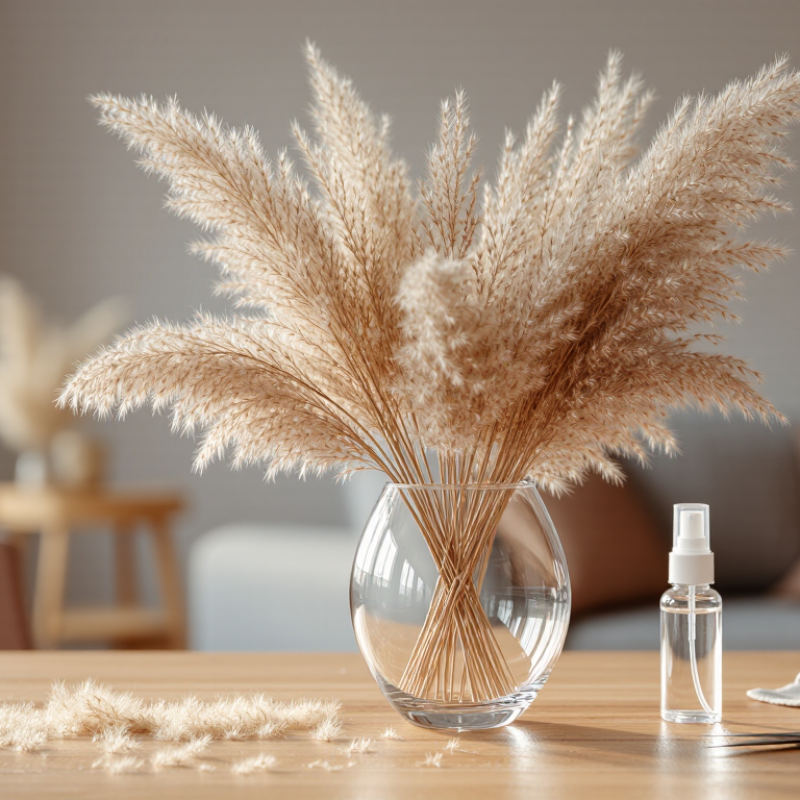
Dried pampas grass sheds because its feathery plumes are made of many small florets attached to delicate stems. As the plant matures and dries, some florets loosen naturally. A few pale fibers on the shelf are normal. The amount varies with harvest timing, variety, and how gently the stems were handled before sale.
Movement often makes shedding more noticeable. Brushing the plumes, shaking them out, or placing them beside a busy doorway can knock loose florets onto the floor. Direct sunlight may fade and dry the fibers further, while strong airflow from a fan or heater can keep them in motion. Damp air is not a reliable fix: it may soften stems, then leave them brittle as they dry again.
Storage and preparation matter, too. Plumes compressed in a box may release loose fibers when unpacked or fluffed. Give them room to open, and avoid rubbing one stem against another. If shedding continues heavily after the stems have rested, inspect for crushed, broken, or unusually brittle sections. Not every loose plume means the grass was poorly prepared; natural variation is real. I sometimes expect dried plants to behave like fabric, which is not quite fair. A gentle touch helps, but cannot stop every floret from falling.
| Cause or Condition | Why Shedding Happens | What Can Make It Worse | Practical Prevention |
|---|---|---|---|
| Natural maturity and drying | Pampas plumes are made up of many small flower structures. As they mature and dry, some may loosen and fall away. | Choosing very mature, over-dry plumes can mean more loose material from the start. | Select plumes that are fully developed but still hold their shape. Some initial shedding is normal and cannot be eliminated completely. |
| Rough handling or frequent movement | Touching, brushing, shaking, or repeatedly moving the plumes can dislodge their delicate fibers and florets. | Carrying the arrangement by the plumes, placing it in a busy walkway, or letting it rub against furniture. | Handle stems gently, hold them near the base, and display the arrangement somewhere with little contact or airflow disturbance. |
| Transport and unpacking | Compression and friction during shipping can loosen material before the plumes are arranged. | Pulling tightly packed stems apart quickly or vigorously shaking them indoors. | Unpack slowly. If loose material needs to be removed, gently shake the stems outdoors or over a protected surface before arranging. |
| Direct sunlight and heat | Prolonged exposure can fade plant material and make dried fibers more brittle. | Displaying plumes on a sunny windowsill or close to a heater, fireplace, or other heat source. | Choose a cool, shaded indoor location away from direct sunlight and heat sources. |
| Humidity and moisture | Dried plant material can absorb moisture, lose its crisp texture, or become more vulnerable to deterioration. | Keeping the arrangement in a damp room, near a shower, or where it may be splashed. | Display and store plumes in a dry indoor space. Do not wash or mist them with water. |
| Air movement and ventilation | Repeated strong airflow can make lightweight plumes sway and rub against nearby objects, loosening fibers. | Placing them directly in front of a fan, air conditioner, or frequently opened door. | Keep the arrangement away from direct drafts and leave enough space so the plumes do not brush against walls or other objects. |
| Cleaning and dusting | Wiping or brushing the plume surface can pull off delicate fibers. | Using a cloth, stiff brush, or strong vacuum suction on the plumes. | Minimize handling. If needed, remove dust with a very gentle, low-pressure stream of cool air from a distance. |
| Protective spray use | A light coating may help hold loose fibers in place, but results vary by plume and product. | Applying too much product, spraying too close, or using an untested product that changes color or texture. | If using a suitable spray, test a small area first and follow its label. Apply lightly in a well-ventilated area, away from flames and heat; spraying is optional. |
Note: Dried pampas grass is a natural plant product, so a small amount of shedding may occur even with careful handling. Keep dried plumes away from open flames and other ignition sources.
Its plumes contain many delicate florets that loosen as they dry. A few pale fibers are normal.
Brushing, shaking, and busy doorways can knock florets loose. Fans and heaters may keep fibers moving.
Direct sunlight can fade and dry the fibers further. A shaded spot may help preserve their appearance.
Not reliably. Dampness may soften stems, which can become brittle again as they dry.
Give the plumes room to open, and avoid rubbing stems together. Some loose fibers may fall.
Choose a clear spray labeled for dried flowers or botanicals. Work in a ventilated space, protect the floor, and follow the label directions.
No. Apply a light, even mist from the stated distance; soaking may leave clumped, stiff fibers. Test one small plume and let it dry completely.
It can reduce loose fibers, but cannot prevent every floret from falling. I once expected dried plants to behave like fabric. That was unfair.
Dried pampas grass naturally sheds because its delicate plumes lose moisture and become fragile over time. Rough handling, poor-quality stems, humidity changes, strong airflow, and direct sunlight can make the shedding worse. To learn how to prevent dried pampas grass from shedding, begin by selecting full, well-dried plumes with firm stems and minimal loose fibers. Inspect each stem carefully and remove damaged or excessively fragile pieces before preparation.
Clean the plumes gently by shaking them outdoors or using a low, cool airflow to remove dust without crushing the fibers. A light, even application of a suitable protective spray can help hold the plumes together and reduce future shedding; always test a small area first and allow the stems to dry completely. For long-lasting results, display pampas grass in a dry, stable location away from direct sunlight, heaters, fans, and high-traffic areas. When storing it, keep the stems upright or loosely wrapped in breathable material to preserve their shape and minimize fiber loss.

 Maison Flower