In the world of floral design, the distinction between materials often sparks intriguing discussions. Experts frequently encounter the question, "What is the difference between 3D print and silk flowers?" Mark Smith, a renowned designer in floral technology, once stated, "3D printing offers a versatile platform, while silk flowers excel in realism and aesthetic appeal."
3D printed flowers are crafted using digital technology. This method allows for intricate designs that can embody creativity beyond traditional methods. Conversely, silk flowers provide a tactile experience and a lifelike appearance, often favored for arrangements and decor. Each type possesses unique characteristics and serves different purposes.
While 3D printing allows for customization, it can lack the warmth associated with organic materials. Silk flowers, though realistic, have limitations in design flexibility. Balancing innovation with sensory experience remains a challenge in the industry. Understanding the nuances between these two options is crucial for making informed choices in floral artistry.
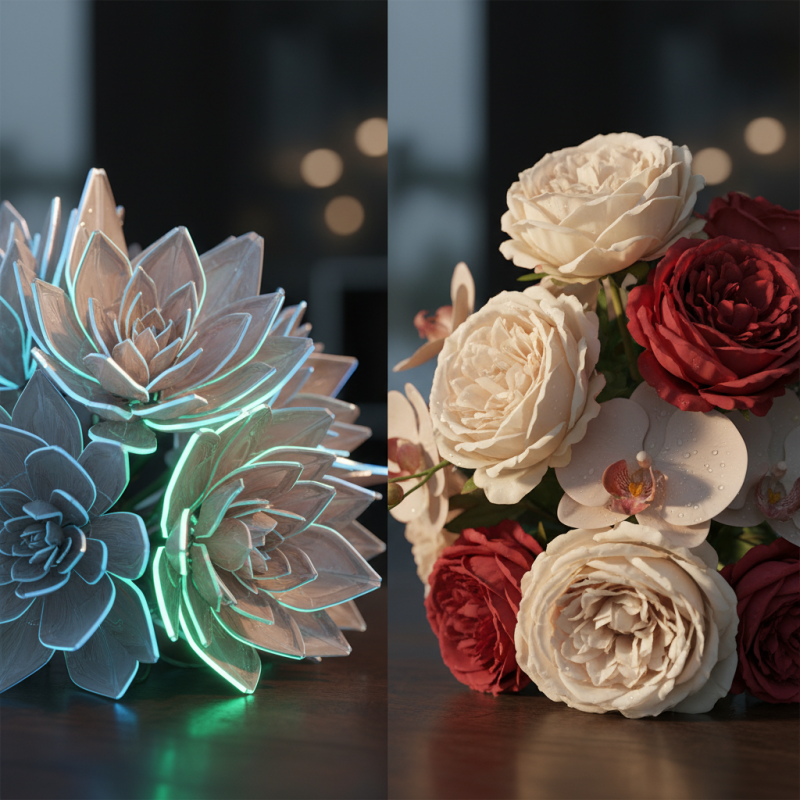
When comparing 3D printing and silk flowers, material composition plays a critical role. 3D printed flowers often use thermoplastics, which can replicate intricate designs and vibrant colors. These materials are sturdy and can withstand various environmental conditions. However, they may lack the soft texture and natural feel associated with real flowers.
Silk flowers, on the other hand, are made from synthetic fibers that mimic the appearance of real petals. They provide a tactile experience that 3D printed flowers cannot replicate. Silk flowers can look very realistic, but they may fade over time, especially when exposed to sunlight.
Additionally, the production process differs significantly. 3D printing allows for customization, creating unique designs on demand. This method can result in waste if not executed properly. In contrast, creating silk flowers often involves more manual methods and materials sourcing, which may not always align with sustainable practices. Each material has its strengths and drawbacks, making the choice between them dependent on individual preferences and specific use cases.
When considering the durability and longevity of 3D prints versus silk flowers, several factors come into play.
3D printed items are typically made from plastics or resins, giving them a strong, rigid structure. They can withstand various environmental conditions. However, they may fade over time when exposed to sunlight.
Silk flowers, while softer and more lifelike, can also show wear and tear. They may fade and fray but generally retain their shape better than 3D prints in humid environments.
The choice between them often depends on the intended use. 3D prints can be great for artistic displays but may require careful handling.
Silk flowers, with their realistic appearance, are suitable for arrangements and decorations. They can offer a more timeless feel, though they need occasional dusting.
Each option has its pros and cons, making the decision somewhat subjective. Reflecting on your personal needs can lead to better choices.
When comparing 3D printed flowers and silk flowers, the aesthetic appeal is truly different. 3D printed flowers often exhibit a modern feel. Their designs can be intricate and customized. However, they may lack the organic textures of real petals. Silk flowers, on the other hand, evoke a classic elegance. They can mimic the look of freshly cut flowers remarkably well.
Tips: Choose colors that complement your decor. This choice can enhance the overall look of your space. Consider mixing both types. Use 3D prints for contemporary styles and silk flowers for traditional themes. This blend creates a balanced aesthetic.
Not all 3D printed flowers capture nature's true essence. Some designs might feel rigid. Silk flowers, while beautifully realistic, can sometimes gather dust. Regular cleaning is necessary to maintain their appearance. Reflecting on these elements helps in making the right choice between them. It's essential to assess personal preferences and environmental factors.
| Feature | 3D Printed Flowers | Silk Flowers |
|---|---|---|
| Realism | Highly customizable designs, can mimic natural flowers with precision. | Typically has a glossy finish that may appear artificial. |
| Color Variety | Unlimited color options, customizable during the printing process. | Limited to available fabric colors, typically more muted. |
| Texture | Varies by material; can achieve different textures. | Soft and smooth texture resembling real petals. |
| Weight | Generally lightweight, depending on the material used. | Also lightweight but can vary based on construction. |
| Durability | Highly durable, resistant to fading and damage. | Less durable, can wear out or fade over time. |
| Cost | Potentially lower costs with mass production. | Typically higher due to fabric and manufacturing costs. |
When analyzing the cost considerations between 3D prints and silk flowers, it is essential to understand the underlying pricing patterns. A recent industry report from Smithers Pira highlights that 3D printing can range from $50 to $500 per unit, depending on complexity. In contrast, silk flowers typically cost between $20 and $100. This substantial price difference often hinges on the customization and durability offered by 3D prints, appealing to those seeking unique designs.
However, the initial investment for 3D printing can be misleading. The process requires expensive machinery and materials. Maintenance costs can impact the overall price as well. Conversely, silk flowers, while more affordable, have a shorter lifespan and may need to be replaced more frequently. For example, quality silk flowers can last for a few years, but they show wear over time. This factor might require buyers to rethink their long-term expenses.
A 2023 report from the Freedonia Group indicates a growing trend toward 3D-printed decor in both residential and commercial settings. Yet, many consumers remain hesitant due to the perceived complexity of designing a 3D print. The lack of familiarity may deter investment, even if the end result could be more valuable. This landscape showcases the delicate balance between upfront costs and long-term benefits in making a choice between these two decorative options.
When comparing the environmental impact of 3D printing and silk flowers, the differences are striking.
3D printing often uses plastic materials, which can be harmful to nature.
The production of these plastics releases carbon emissions. Many plastics are not biodegradable, leading to long-lasting pollution.
However, some 3D printing processes do allow recycling of materials, which can soften their environmental footprint.
On the other hand, silk flowers present their own sustainability challenges.
While they do not wither like real flowers, their manufacture often relies on synthetic fibers.
These materials can also involve significant energy consumption during production.
Additionally, silk flowers are non-biodegradable and may contribute to landfill waste, just like plastic.
It's essential to consider the full lifecycle of both options.
The creation of silk flowers can sometimes involve less toxic processes than producing certain plastics.
Yet, they both need a careful examination of their long-term environmental effects.
Engaging with sustainable practices in either production method is crucial for reducing damage to our ecosystems.
: 3D prints are rigid and withstand various conditions, but may fade in sunlight. Silk flowers retain shape better in humidity.
Consider the intended use, desired appearance, and maintenance needs of both. Each has its unique pros and cons.
Yes, 3D prints can range from $50 to $500, while silk flowers generally cost between $20 and $100, reflecting customization.
Yes, they may require careful handling and can incur additional costs for upkeep. Reflection on your use is important.
Silk flowers can show wear and tear, fading and fraying, but they typically last a few years with occasional dusting.
3D printing uses plastics, contributing to pollution. Some materials can be recycled, however, which may reduce their footprint.
Silk flowers are non-biodegradable and rely on synthetic fibers, raising similar concerns about environmental impact.
Yes, many consumers feel overwhelmed by the complexity, despite the potential value of unique designs in 3D prints.
Evaluating the full lifecycle and engaging in eco-friendly practices are crucial for minimizing ecological damage.
The article "2026 Top Difference Between 3D Print and Silk Flowers" explores the key distinctions between these two types of floral representations. One primary focus is on the differences in material composition, where 3D printing often utilizes synthetic materials, while silk flowers are made from fabric that imitates real petals. Durability and longevity also play a crucial role, as 3D prints may exhibit varying lifespans depending on their exposure to elements, whereas silk flowers typically provide a longer-lasting option for indoor decor.
Aesthetic appeal is another significant factor, showcasing the visual differences between the two, with 3D prints offering unique designs but silk flowers often presenting a more traditional look. Cost considerations reveal diverse pricing trends, with 3D printing frequently requiring a higher initial investment. Lastly, the article addresses environmental impact, discussing sustainability concerns associated with both methods. Overall, these insights address the question: what is the difference between 3D print and silk flowers, providing readers with a thorough understanding of each option's merits and limitations.

Maison Flower