Choosing silk flowers for a centerpiece is no longer about accepting shiny petals and stiff plastic stems. In 2026, the most convincing designs use soft-touch fabrics, layered petals, natural color variation, and flexible branches that respond to light. A realistic arrangement should look attractive from across the room, yet remain believable at arm’s length. So, what are the most realistic silk flowers for centerpieces? The answer depends on flower shape, material quality, stem detail, and how naturally each bloom sits among the others.
From hands-on arranging experience, garden roses, peonies, hydrangeas, ranunculus, and delicate eucalyptus remain strong choices. Their fuller forms hide joins and create a generous table display. Close inspection still matters. Some petals look beautiful online but appear overly uniform beside real greenery. That is a small flaw, but an important one. I have found that lightly textured petals and muted centers often appear more natural than perfect, bright colors. Dust can also collect between dense blooms, especially on dining tables, so washable materials deserve attention.
This guide compares the best realistic silk flowers for centerpieces in 2026. It considers color accuracy, tactile finish, stem flexibility, durability, and arrangement value. It also looks at seasonal styling, vase proportions, and practical maintenance. A centerpiece should invite conversation, not compete with it. Keep the scale balanced. Leave room for plates, glasses, and passing hands. Even the most lifelike flowers need thoughtful placement to feel genuinely convincing.
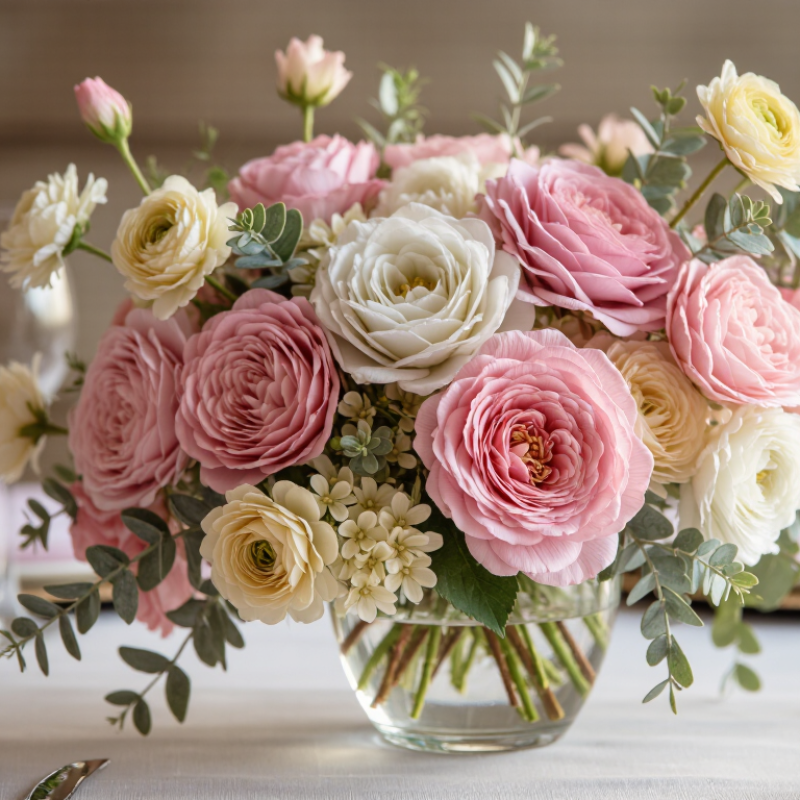
Choosing realistic silk flowers for 2026 centerpieces requires more than checking color and price. I evaluate each arrangement through AIFD’s seven principles: balance, contrast, dominance, proportion, scale, rhythm, and unity. These principles expose weak designs quickly. A centerpiece may look convincing close up, yet lose balance when viewed across a dining table.
I begin with tactile details. Quality stems should bend naturally, not snap into rigid angles. Petals need varied edges, subtle color shifts, and slight asymmetry. Perfect flowers often look artificial. I place them beside linen, glass, and candlelight, then inspect them from three distances.
Dominance should guide the eye, while rhythm should repeat shapes without creating a mechanical pattern. Proportion matters too; oversized blooms can overwhelm a narrow table. AIFD’s educational standards provide a professional foundation, but practical testing remains essential.
Market evidence supports this careful approach. Grand View Research estimated the global artificial flowers market at approximately USD 1.75 billion in 2023, with continued growth projected through 2030. The report also identifies improved material quality and realistic detailing as important market drivers. However, realism is not only visual. A 2024 consumer sustainability report from Deloitte found that many shoppers weigh durability and long-term value when evaluating purchases. That finding matters for event décor. I still find flaws in some arrangements, especially under cool lighting. That is useful. A realistic centerpiece should survive scrutiny, not merely impress a product photograph.
Keep guest-level designs below 12 inches. This height leaves faces visible across the table. Plates, glasses, and moving hands still have room. Narrow vases can make flowers feel taller. Check the arrangement from a seated position.
Wide blooms may block faces before slim stems do. Dark foliage can also form a heavy visual wall. Place sample settings around the arrangement. Test the view from every chair. My overhead view once looked attractive, but eye level exposed the problem.
Choose softly irregular petal edges and gentle stem bends. Slightly uneven spacing looks more believable. Avoid making every bloom the same height. Nature rarely looks perfectly arranged. A few imperfect bends help.
Inspect petals, veins, color, foliage, and stems separately. Use a one-to-five score for each area. Look under daylight, warm lamps, and close camera view. Deep printed veins may look artificial. Flat color can resemble plastic.
Leaves should show varied greens, slight bends, and subtle texture. Extremely glossy surfaces often feel manufactured. Stems should taper gently with muted colors. Avoid bright coatings, exposed seams, and visible wire. Touch the materials too.
Repeat several compact designs instead of using one oversized arrangement. Low clusters can combine garden-style flowers, small branches, and restrained greenery. Keep the pattern visually connected. Guests should notice flowers, then continue speaking comfortably.
Strong ultraviolet exposure may fade petals, weaken adhesive, or make leaves brittle. Place one sample near a bright window for three months. Keep another sample protected. Photograph both under similar lighting. Pale flowers can change quietly.
Keep arrangements away from candles, heaters, lamps, and blocked exits. Review textile fire-safety guidance for the venue. Ask a qualified safety professional or local authority about applicable rules. Requirements may differ by location. Do not guess.
Rotate them every few weeks. Wipe dust with a soft, dry brush. Avoid unknown cleaners on delicate petals. Inspect wires, bases, and ribbons for heat damage. Replace parts that shed fibers or lose shape. My checks sometimes missed pale fading.
This guide identifies the most realistic silk flowers for centerpieces through a practical 2026 evaluation framework. It applies AIFD’s seven principles of floral design to assess proportion, balance, rhythm, harmony, color, unity, and emphasis, while comparing polyester, polyblend, and silk materials for texture, durability, and color stability. ISO 4892-3 UV exposure testing provides a consistent way to evaluate fading and surface changes under simulated sunlight.
What are the most realistic silk flowers for centerpieces? The answer depends on more than appearance. A detailed scorecard examines natural petal shaping, visible veins, layered color, convincing foliage, and realistic stem construction. Designs should also remain below 12 inches when placed at guest level to support conversation and visibility. For safer use, review applicable NFPA 701 guidance, keep arrangements away from heat sources, and conduct three-month UV-exposure checks to monitor fading, brittleness, or material deterioration.

 Maison Flower